Can Face Yoga Replace Everything? What It Can and Cannot Do

Face Yoga is sometimes presented online as if it can replace almost everything.
Skincare.
Professional facial care.
Aesthetic treatments.
Or even every other approach to caring for the face.
I do not believe that is the most helpful way to understand Face Yoga.
Face Yoga can be a valuable part of a facial wellness routine, but it has its own role. Understanding what that role actually is can help you approach the practice with more realistic expectations and greater intention.
What Face Yoga Is Really About
Face Yoga brings attention to how you use your facial muscles, where you hold tension, how different areas move, and the facial patterns you repeat throughout the day.
A thoughtful practice may include controlled facial movements, relaxation, breathing, massage, and greater awareness of posture and expression.
But for me, one of the most valuable aspects of Face Yoga is awareness.
Where do you tend to hold tension?
Do you repeatedly contract your forehead while concentrating?
Does your jaw rarely feel completely relaxed?
Does one side of your face move differently from the other?
These are patterns many people never notice until they intentionally begin paying attention to their face.
Face Yoga Can Help You Become More Aware of Your Face
Most facial movement happens automatically.
We smile, speak, chew, squint, concentrate, react emotionally, and look at screens without consciously thinking about which muscles are working.
Over time, certain patterns may become very familiar.
Face Yoga creates an opportunity to slow down and notice them.
That awareness can make your practice more intentional instead of simply repeating exercises because they are popular online.
Face Yoga Can Become Part of Your Wellness Routine
One of the things I appreciate about Face Yoga is that it does not require an elaborate setup.
It can become part of a morning ritual, an evening routine, or simply a few intentional moments during the day.
You do not necessarily need a long practice.
Consistency, awareness, and understanding what you are doing can matter much more than trying to perform as many exercises as possible.
One Skincare Step Face Yoga Does Not Replace
Face Yoga focuses on facial movement, muscle awareness, relaxation, and tension patterns. It does not replace cleansing or the basic care you choose for your skin.
If you enjoy using a facial cleansing tool, a soft silicone cleansing brush can be a practical addition to your skincare routine while keeping skincare and Face Yoga as two separate but complementary parts of facial care.
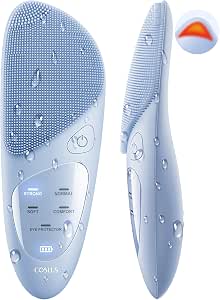
Face Yoga Does Not Replace Skincare
Face Yoga and skincare have different roles.
Cleansing, moisturizing, and choosing products appropriate for your skin focus primarily on caring for the skin itself.
Face Yoga focuses more on movement, facial awareness, muscle use, relaxation, and tension patterns.
One does not need to replace the other.
They can simply become different parts of the same intentional facial care routine.
Face Yoga Does Not Replace Professional Care
There are situations where professional evaluation or care is appropriate.
Face Yoga should not be used as a substitute for medical, dental, dermatological, physical therapy, or other professional healthcare when it is needed.
If you experience pain, sudden changes, persistent discomfort, or something that concerns you, the appropriate qualified professional should evaluate it.
Face Yoga belongs in the wellness space.
It does not need to replace healthcare in order to have value.
Face Yoga Cannot Completely Redesign Your Facial Structure
Your natural anatomy, bone structure, genetics, and individual facial characteristics are part of what makes your face yours.
Face Yoga should not be presented as a way to completely redesign your facial structure or transform you into someone else.
That is neither a realistic nor a healthy goal for the practice.
A more thoughtful approach is learning how your own face moves and working more consciously with the face you already have.
What About Aesthetic Procedures?
Face Yoga and aesthetic procedures are not the same thing.
Some people choose professional facial treatments or aesthetic procedures.
Others prefer not to.
And some people may include Face Yoga as part of their wellness routine while also choosing other forms of facial care.
These are personal decisions.
Face Yoga does not need to be positioned as the enemy of aesthetic procedures in order to have value.
It can simply exist as its own practice.
More Face Yoga Is Not Always Better
Another common assumption is that if a little Face Yoga is useful, then doing much more must automatically be better.
That is not necessarily the case.
Your face is already moving throughout the entire day.
Repeating large numbers of exercises without understanding your own facial patterns can make a practice less intentional.
This is why I prefer awareness, appropriate technique, and consistency over simply doing more and more movements.
Random Exercises Are Not the Same as a Thoughtful Practice
It is easy to find hundreds of facial exercises online.
One for the eyes.
Another for the jawline.
Another for the cheeks.
Another for the forehead.
But collecting exercises does not automatically create a good Face Yoga practice.
Two people may be concerned about exactly the same area while using their faces very differently.
One person may hold excessive tension.
Another may have a very different movement pattern.
That is why understanding the face matters just as much as knowing an exercise.
Realistic Expectations Make Face Yoga Better
Face Yoga becomes much more enjoyable when you stop expecting it to solve every facial concern.
You can use it to become more aware of your face.
To explore movement.
To notice unnecessary tension.
To develop a more intentional facial care routine.
To create moments of relaxation and self-care.
And to become more conscious of habits you may otherwise never notice.
Those are meaningful reasons to practice.
Face Yoga does not need exaggerated promises to be valuable.
Ready to Practice Face Yoga With a More Thoughtful Approach?
FaceMoves gives you short, focused Face Yoga sessions designed to make it easier to practice consistently without having to search for random exercises every time.
Choose the area you want to focus on, follow the guided practice, and incorporate Face Yoga into your routine at your own pace.