How Personalized Guidance Changes Your Results

Two people can look at the same area of their face and have exactly the same concern.
Perhaps both want to work on the jawline.
Both may notice tension around the mouth.
Or both may feel that one side of the face looks different from the other.
But that does not mean they should necessarily practice the same exercises.
The way each person moves, holds tension, uses facial muscles, sits, speaks, and expresses emotion can be completely different.
This is where personalized guidance can change the way Face Yoga is approached.
The Area You Notice Is Not Always the Whole Story
When you look in the mirror, it is natural to focus on the area that bothers you most.
Maybe it is the eye area.
The jawline.
The forehead.
The cheeks.
Or the neck.
But what you see does not always tell you why that area is behaving the way it is.
The face works through interconnected movement patterns.
A concern around the jaw, for example, may involve the way you use your mouth, neck, posture, or even one side of the face more than the other.
That is why simply choosing an exercise based on the name of a facial concern can sometimes be too simplistic.
Observation Comes Before Exercise
One of the most valuable parts of personalized Face Yoga is observation.
Before deciding what to practice, it helps to understand what your face is already doing.
Where do you hold tension?
Which areas move easily?
Does one side behave differently from the other?
Do you compensate with the forehead when moving the eye area?
What happens around your mouth when you concentrate?
These details can influence the direction of a practice.
Technique Matters More Than It May Seem
Watching an exercise and performing it are not always the same thing.
Small differences in finger placement, pressure, movement, posture, or facial tension can change how a technique feels.
You may also unknowingly activate another area of the face while trying to work somewhere else.
When someone can actually observe you practicing, these small details become much easier to notice.
Technique correction is not about making every movement perfect.
It is about helping you understand what you are doing and making the practice more conscious.
A Small Practice Essential I Like
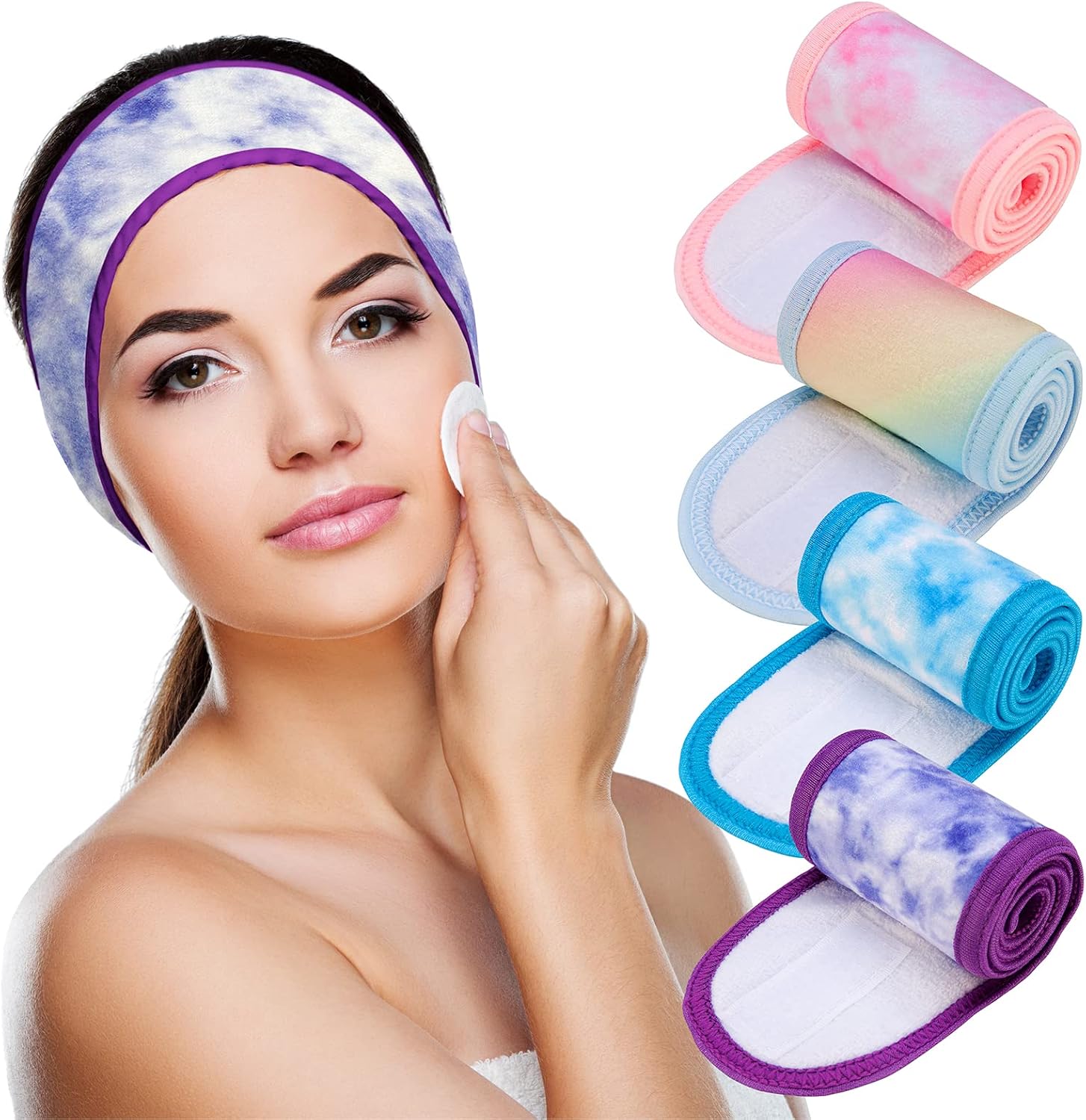
Keeping the hair comfortably away from the face can make Face Yoga, facial massage, and skincare feel much easier and less distracting.
A soft spa headband is one of those small practical items I like having nearby when I want to focus fully on the face.
Generic Routines Cannot See What You Are Doing
A video can demonstrate a movement.
But a video cannot see you.
It cannot notice that you are tightening your jaw while working on your eyes.
It cannot see that one side is moving differently.
It cannot tell you that you are using more pressure than necessary.
And it cannot adjust your practice based on what changes from one week to the next.
This does not mean generic classes are not useful.
They can be an excellent way to build a regular practice.
But personalized guidance serves a different purpose.
Your Practice Can Evolve With You
A personalized practice does not have to remain exactly the same forever.
As you become more aware of your face, your technique may improve.
Certain movements may become easier.
You may discover patterns you had never noticed before.
Your priorities may also change.
This is why ongoing observation can be valuable.
Instead of simply repeating the same routine indefinitely, the practice can evolve as your understanding of your face develops.
More Exercises Are Not the Goal
Personalization does not mean giving you more and more exercises.
Sometimes a smaller, more focused practice makes much more sense.
The goal is not to collect techniques.
It is to understand why you are doing them.
A carefully selected movement performed with awareness can be more meaningful than a long routine performed without understanding what your face is actually doing.
Your Face Has Its Own History
Your expressions, habits, posture, tension patterns, facial structure, and daily routines are individual to you.
You may have spent years raising one eyebrow more than the other.
Perhaps you hold tension in your jaw during stressful periods.
Maybe your work requires long hours in front of a screen.
Another person may have completely different patterns.
This is why I do not believe one routine can be perfect for every face.
Personalized Guidance Is Also About Confidence
One of the biggest advantages of receiving individual guidance is knowing that you can ask questions.
Am I doing this correctly?
Should I feel tension here?
Am I using too much pressure?
Why does one side feel different?
Should I continue with this technique?
When you understand what you are doing, the practice becomes less uncertain.
You are no longer simply hoping that you copied a movement correctly.
You begin to practice with greater awareness and confidence.
The Goal Is Eventually to Understand Your Own Face
Personalized guidance should not make you dependent on someone forever.
Quite the opposite.
A good personalized experience should help you understand your own facial patterns, recognize what your face needs, and feel increasingly confident about your practice.
The goal is to give you knowledge that stays with you after the sessions are finished.
Ready for a Face Yoga Practice Created Around Your Face?
My 4-week VIP Program begins with a private facial assessment so I can understand your face, your movement patterns, your concerns, and the areas you would most like to work on.
From there, I create your personalized Face Yoga practice and guide you through four private weekly sessions with live technique correction, recordings, and direct support throughout your journey.