What Facial Habits May Be Affecting the Way You Look

Most of the movements your face makes during the day happen without conscious thought.
You smile, concentrate, look at screens, speak, chew, squint, raise your eyebrows, tighten your jaw, and react emotionally — often without noticing how frequently the same patterns are repeated.
None of these movements are inherently “bad.”
Your face is designed to move.
But becoming aware of repeated facial habits can help you understand why certain areas may feel tighter, more active, or simply different from others.
Facial Habits Are Often Automatic
You probably do not consciously decide to tighten your jaw when concentrating.
You may not notice that you raise your eyebrows every time you look at a screen.
Or perhaps you frequently press your lips together while working, rest your face on one hand, or squint when reading.
These movements can become so familiar that they simply feel normal.
Awareness begins when you start noticing them.
The Same Expression Can Be Repeated Hundreds of Times
Think about how many times you look at your phone during one day.
Each time, your head position, eye movement, jaw position, and facial expression may follow a similar pattern.
The same can happen while driving, working on a computer, reading, or talking.
One isolated movement is rarely the important part.
The repeated pattern is what becomes interesting.
Jaw Clenching Is a Common Example
Many people carry tension through the jaw without realizing it.
You may tighten the jaw while working, concentrating, driving, exercising, or responding to stress.
Sometimes the teeth are not even touching, yet the muscles around the lower face remain unnecessarily active.
Simply noticing when this happens can be an important first step toward understanding your facial patterns.
A Simple Addition to My Nighttime Routine
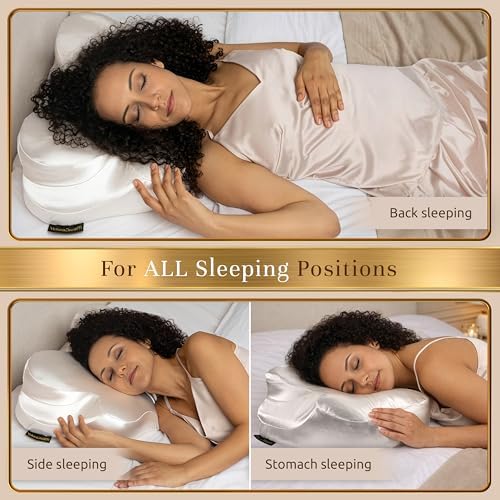
I like keeping my nighttime routine simple and comfortable. A smooth silk or satin pillowcase can be a lovely addition to a relaxing evening routine, especially if you enjoy paying more attention to the little details of your facial and skincare habits.
It is one of those small self-care items that can easily become part of your everyday routine.
As an Amazon Associate I earn from qualifying purchases.
Sleeping Habits Are Worth Noticing Too
Most people naturally have a preferred sleeping position.
You may sleep on the same side most nights or frequently wake up with your face positioned in a similar way.
There is no need to become anxious about how you sleep.
But if you are trying to understand why one side of your face feels or looks different from the other, your sleeping habits are simply another pattern worth observing.
Resting Your Face in Your Hand
This is another very common habit.
While working, reading, or sitting at a desk, many people support the chin or cheek with one hand.
Sometimes the same side is used repeatedly.
Again, the goal is not to tell yourself that you must never touch your face.
The useful part is simply becoming aware of what you repeatedly do without realizing it.
Your Screen Habits Can Influence Facial Tension
Screens demand a surprising amount of facial activity.
You may narrow your eyes, wrinkle the area between your eyebrows, raise your forehead, move your head forward, or tighten your jaw while concentrating.
Take a moment occasionally and notice what your face is doing while you work.
Is your forehead relaxed?
Is your jaw soft?
Are your shoulders lifted?
Are you squinting?
These little observations can tell you a great deal about your everyday movement patterns.
Stop Trying to Hold a “Perfect” Face
Awareness should not turn into constantly monitoring or controlling every expression.
You do not need to stop smiling, laughing, or expressing emotion.
Trying to keep your face perfectly still defeats the purpose.
The goal is simply to distinguish between natural expression and unnecessary tension that you may be holding without realizing it.
Small Awareness Changes Can Make Your Practice More Intentional
Once you begin recognizing your habits, Face Yoga becomes more meaningful.
Instead of randomly choosing exercises because they are popular online, you can begin thinking about how you actually use your own face.
You may notice that one side works more.
You may discover that you hold tension around the mouth.
Perhaps your forehead becomes active whenever you concentrate.
Or maybe your jaw rarely feels completely relaxed.
These observations give your practice context.
Your Face Has Its Own Patterns
No two people use their faces in exactly the same way.
This is one reason generic routines do not always address what an individual person actually needs.
Your expressions, posture, tension, habits, facial structure, and movement patterns create your own unique picture.
Understanding that picture allows facial care to become more conscious and intentional.
Ready to Understand Your Own Facial Patterns?
A personalized Face Yoga practice begins by understanding how your own face moves, where you tend to hold tension, and which areas you would most like to work on.
In my 4-week VIP Program, your journey begins with a private facial assessment so I can understand your face before creating your personalized Face Yoga practice.
You then receive four weeks of private guidance, live technique correction, session recordings, and direct support throughout your journey.