What Your Neck Tension May Be Doing to Your Face

Neck tension is easy to overlook when thinking about the face.
Many people focus on the jawline, chin, cheeks, or facial contours without considering what may be happening just below them.
But the face, jaw, neck, and shoulders do not function as completely separate areas. The way you hold your head, use your phone, sit at a desk, or carry tension through your upper body can influence how these areas feel and move throughout the day.
The Face Does Not End at the Jawline
The muscles and movement patterns around the lower face are closely connected with the jaw and neck.
When the neck feels tight or the head is consistently held forward, you may become more aware of stiffness, tension, or restricted movement around the surrounding areas.
This does not mean that neck tension is responsible for every visible change in the lower face.
It simply means that looking only at the face may leave out an important part of the picture.
Everyday Habits Can Add Up
Think about how often you look down at your phone.
Or how long you may sit in front of a laptop without noticing that your head has gradually moved forward.
These positions can become habitual because they happen for hours without conscious thought.
The same is true of facial habits. Small patterns repeated throughout the day can become part of the way you naturally hold yourself.
Tension Is Not Always Where You Feel It
Sometimes the area that feels uncomfortable is not the only area involved.
For example, someone who notices tightness around the jaw may also be carrying tension through the neck or shoulders.
Another person may notice that they raise the shoulders or push the head forward when concentrating.
Becoming aware of these connections can help you approach facial care more thoughtfully instead of focusing only on one isolated concern.
A Simple Upgrade for Better Screen Position
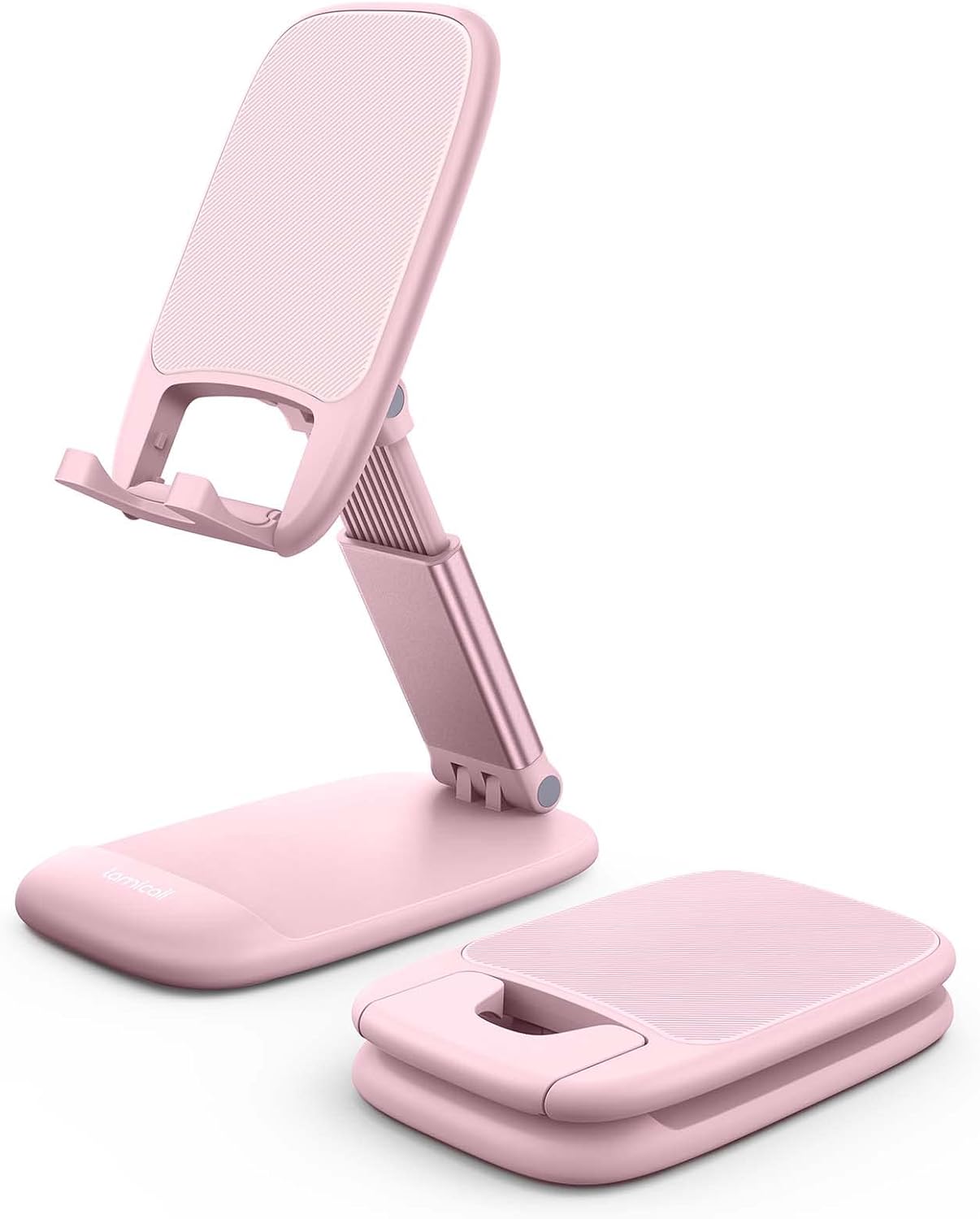
One small change I like is bringing your phone closer to eye level whenever possible. An adjustable phone stand can make this easier during work, reading, or everyday screen time.
It is a simple way to become more conscious of how often you are looking downward for long periods.
As an Amazon Associate I earn from qualifying purchases.
More Stretching Is Not Always the Answer
When people notice tension, the first instinct is often to stretch the area repeatedly.
But awareness matters just as much as movement.
If the same posture or habit continues throughout the day, a few minutes of stretching may not address the pattern that keeps returning.
This is why I prefer to look at how the face, jaw, neck, and posture work together rather than treating each area as completely separate.
Your Practice Should Consider the Whole Picture
Face Yoga is not only about performing movements in front of a mirror.
A thoughtful practice also involves noticing how you use your face and body throughout the day.
Where does your head naturally sit?
Do you tighten your jaw when concentrating?
Are your shoulders relaxed or lifted?
Do you spend long periods looking downward?
These observations can reveal patterns you might otherwise never notice.
The goal is not to constantly monitor yourself. It is simply to develop enough awareness to recognize habits that may be worth changing.
Small Changes Become Part of the Practice
A Face Yoga practice does not begin and end during the few minutes you intentionally work with your face.
Awareness during the rest of the day matters too.
How you sit, how you use screens, how you hold tension, and how often you allow your face and neck to relax can all become part of a more conscious approach to facial care.
Ready to Bring More Awareness Into Your Face Yoga Practice?
FaceMoves gives you short, focused Face Yoga sessions that make it easier to build a consistent practice without searching for random exercises every day.
You can choose the areas you want to work on and practice at your own pace whenever it fits into your routine.